Magnet Free Motor logoMagnet-Free Motor
Start inquiry
Magnet Free Motor logoMagnet-Free Motor
WhatsApp
Magnet Free Motor logoMagnet-Free Motor

China-based rare-earth-free motor manufacturing partner supporting customization, quality control, and global delivery.

Inquiry Email

[email protected]

Email app

Include target torque/speed, quantity, and delivery location.

Instant Chat

+86 18857971991

Chat on WhatsApp

Direct response from our engineering team.

Products
  • IE5 SynRM
  • WRSM / EESM
  • SRM
  • Hairpin Stator
  • EESM Rotor
  • Lamination Stacks
Solutions
  • EV Traction
  • Industrial & HVAC
  • Aerospace Electrification
Manufacturing
  • OEM Capabilities
  • Quality & Validation
  • Prototype Transfer
Resources
  • Blog
  • About
  • Contact / RFQ
  • Privacy Policy
  • Cookie Policy
  • Terms of Service
© 2026 Magnet-Free Motor. All Rights Reserved.|Backed by Linkup Ai Co., Ltd. Manufacturing delivered by the Advanced Manufacturing Division of Linkup Precision.
← Back to Products

Rotor & Stator Lamination Stacks

Precision electrical steel stamping, interlock, bonding, stacking, and inspection support for rotor and stator cores.

Target Buyer:Best for motor designers and sourcing teams that need traceable electrical steel cores for rare-earth-free architectures.

Engineering Assets

Request reference specifications and STEP models without a registration gate. We confirm the correct package after a quick project-fit check.

Request DatasheetRequest STEP Model
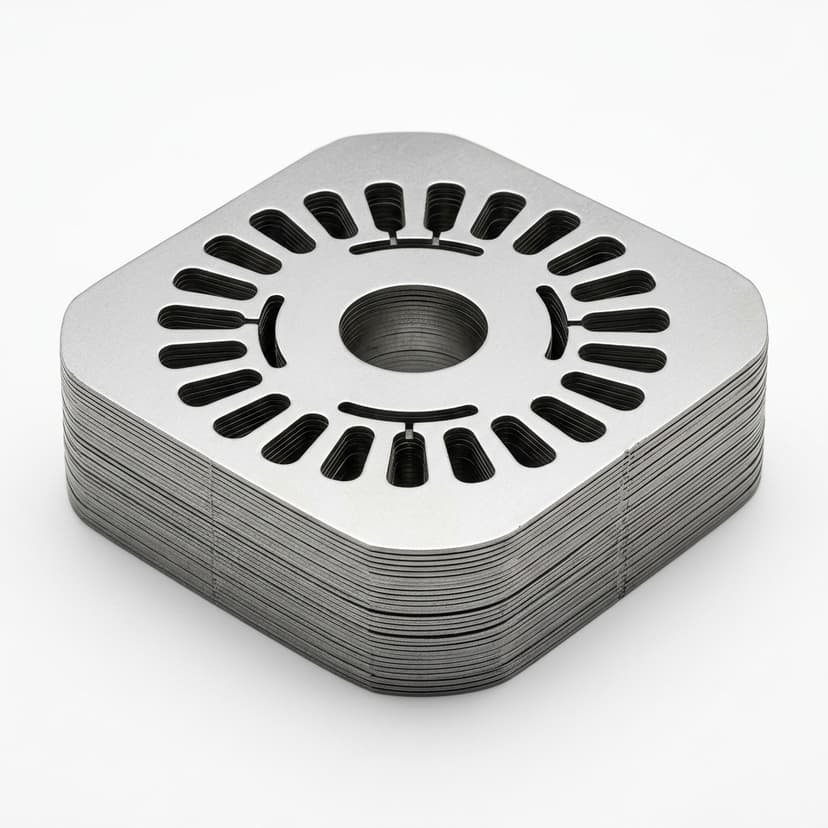
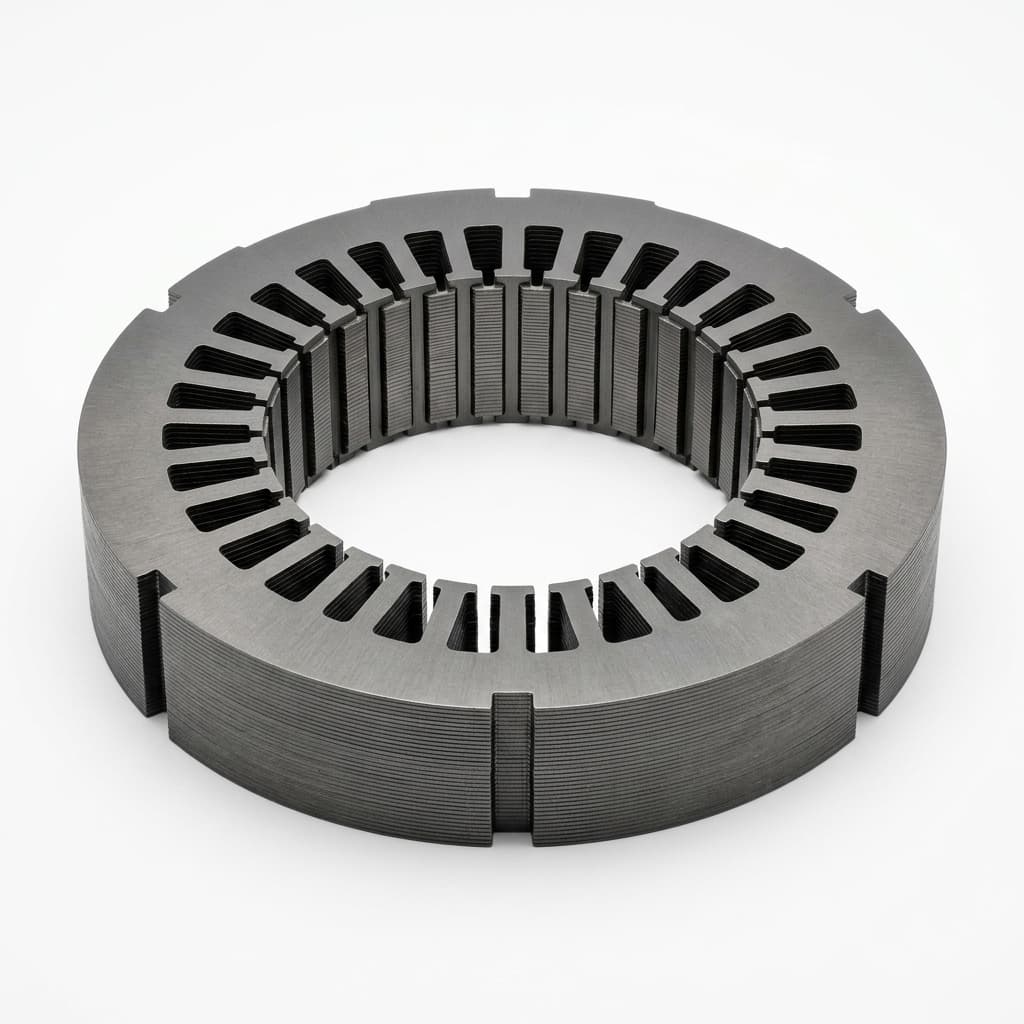
Silicon steel stator lamination stack for precision motor core manufacturing

Capability Highlights

  • Silicon steel lamination stamping for rotor and stator cores
  • Prototype tooling, progressive die planning, and repeat-production transfer
  • Rotor and stator stack assembly by interlock, welding, bonding, or fixture route
  • Stack height, burr, coating damage, runout, and concentricity inspection records
  • Electrical steel grade and coating traceability by lot and drawing revision
  • Core-loss and dimensional evidence planning for high-efficiency motor programs

Typical Applications

  • SynRM rotor barriers and flux-barrier lamination stacks
  • SRM stator and rotor cores with controlled pole geometry
  • EV traction stator cores for hairpin or round-wire windings
  • EESM and WRSM rotor/stator core packages
  • Prototype motor core tooling before production die investment

Engineering Focus

  • Electrical steel grade, coating, and lamination thickness
  • Burr height, flatness, concentricity, and stacking factor
  • Tooling change control from prototype to production
  • Core loss and dimensional inspection plan
  • Stacking method selection: interlock, weld, adhesive bond, or fixture compression
  • Drawing revision, steel lot, coating, and inspection record traceability

Key Evaluation Matrix

MetricTypical RangeWhy It Matters
Lamination Thickness0.20-0.50 mm electrical steelControls iron loss, heat generation, and high-speed efficiency in magnet-free motors.
Material GradeNOES or project-specified silicon steelSteel grade, coating, and lot traceability determine loss, heat, and buyer audit confidence.
Burr and Coating ControlDrawing-defined burr, flatness, and coating limitsBurr and coating damage can reduce insulation between laminations and increase core loss.
Stacking MethodInterlock / weld / bond / fixture routeStack integrity, loss behavior, and manufacturability depend on the joining route.
Tooling StagePrototype die / soft tooling / progressive dieSeparates fast validation samples from production-ready cost and repeatability assumptions.

Production and Validation Flow

Process StepBuyer EvidenceAcceptance Gate
Drawing and material reviewDXF/STEP gap list, electrical steel grade review, coating requirement, and tolerance-risk notes.Material, thickness, coating, stacking method, and inspection plan are frozen for quote.
Prototype stamping and burr controlFirst-article dimensions, burr measurement, coating inspection, flatness, and sample photos.First articles meet drawing-critical dimensions and agreed burr/coating limits.
Stack assembly and dimensional inspectionStack height, skew or alignment, concentricity, runout, fixture route, and outgoing inspection records.Finished stack meets airgap, winding, shaft, and housing interface requirements.
Pilot and lot traceabilitySteel certificate, lot number, die revision, inspection report, packaging record, and change log.Buyer can trace each delivered stack to material lot, drawing revision, and inspection record.

RFQ Checklist

  1. Lamination DXF/STEP, material grade, and thickness
  2. Target stack height, stacking method, and tolerance plan
  3. Annual volume, prototype quantity, and tooling ownership terms
  4. Inspection report format and core loss test expectations
  5. Burr limit, coating damage limit, flatness, concentricity, and runout requirements
  6. Prototype tooling route, production die expectation, and drawing revision control
  7. Packaging standard for loose laminations, bonded stacks, or finished cores
Risk Controls

  • Tooling drift or material substitution: Tie drawings, steel grade certificates, and dimensional inspection records to each lot.
  • Core loss higher than model: Agree steel grade, thickness, coating, stamping stress, annealing expectation, and test evidence before tooling.
  • Burr damages winding insulation: Define burr height, deburring process, coating inspection, and slot-edge acceptance limits before pilot build.
  • Prototype stack cannot transfer to progressive die: Review bridge width, slot geometry, carrier strip, tooling ownership, and change-control plan before production release.

Product Gallery

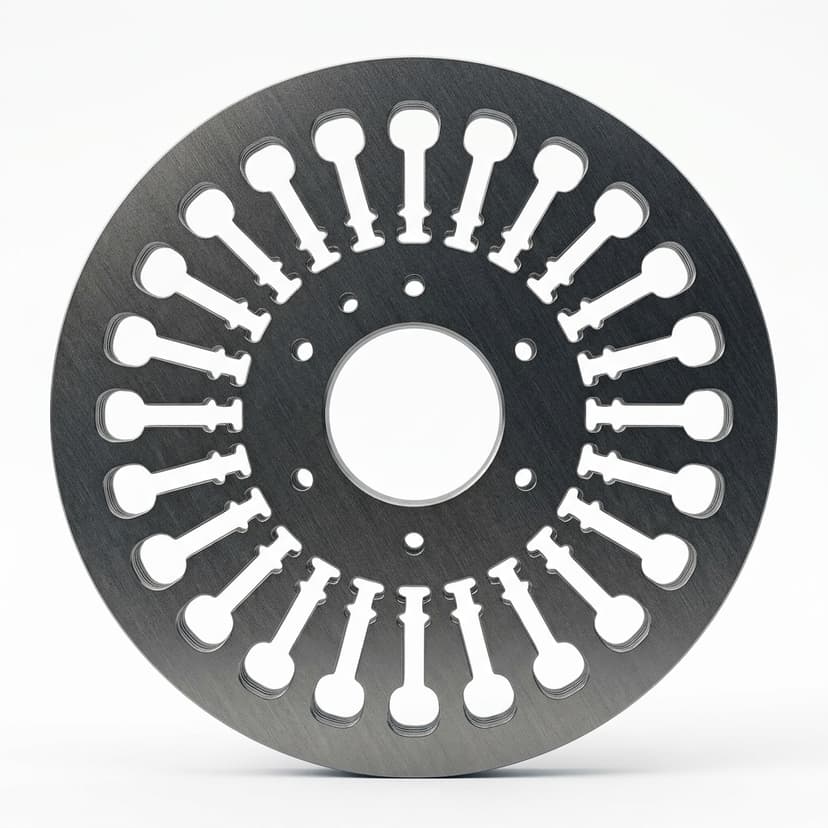
Precision stamped rotor lamination plate for magnet-free motor cores
Electrical steel lamination stack sample for motor core production

Buyer FAQ

Can you support prototype lamination tooling?

Yes. We can review prototype stamping, stack assembly, and transition plans for repeat production.

What files should be sent for a lamination quote?

Send DXF, STEP, material grade, thickness, coating requirement, stack height, tolerance plan, stacking method, volume, and inspection expectations.

Can you deliver loose laminations or finished stacks?

Both routes can be reviewed. The best scope depends on stacking method, core-loss expectations, shipping risk, and how much final assembly the buyer wants to control.

Which inspection records are most useful?

Typical records include material certificate, first-article dimensions, burr height, flatness, concentricity, runout, stack height, coating check, and outgoing packing photos.

Related Resources

  • How to Audit a B2B Motor Manufacturer
  • Precision OEM Manufacturing
  • Quality & Validation Evidence
  • SynRM Industrial Motors
  • Contact Engineering / RFQ

Inquiry Email

[email protected]

Email app

Include target torque/speed, quantity, and delivery location.

Instant Chat

+86 18857971991

Chat on WhatsApp

Direct response from our engineering team.