
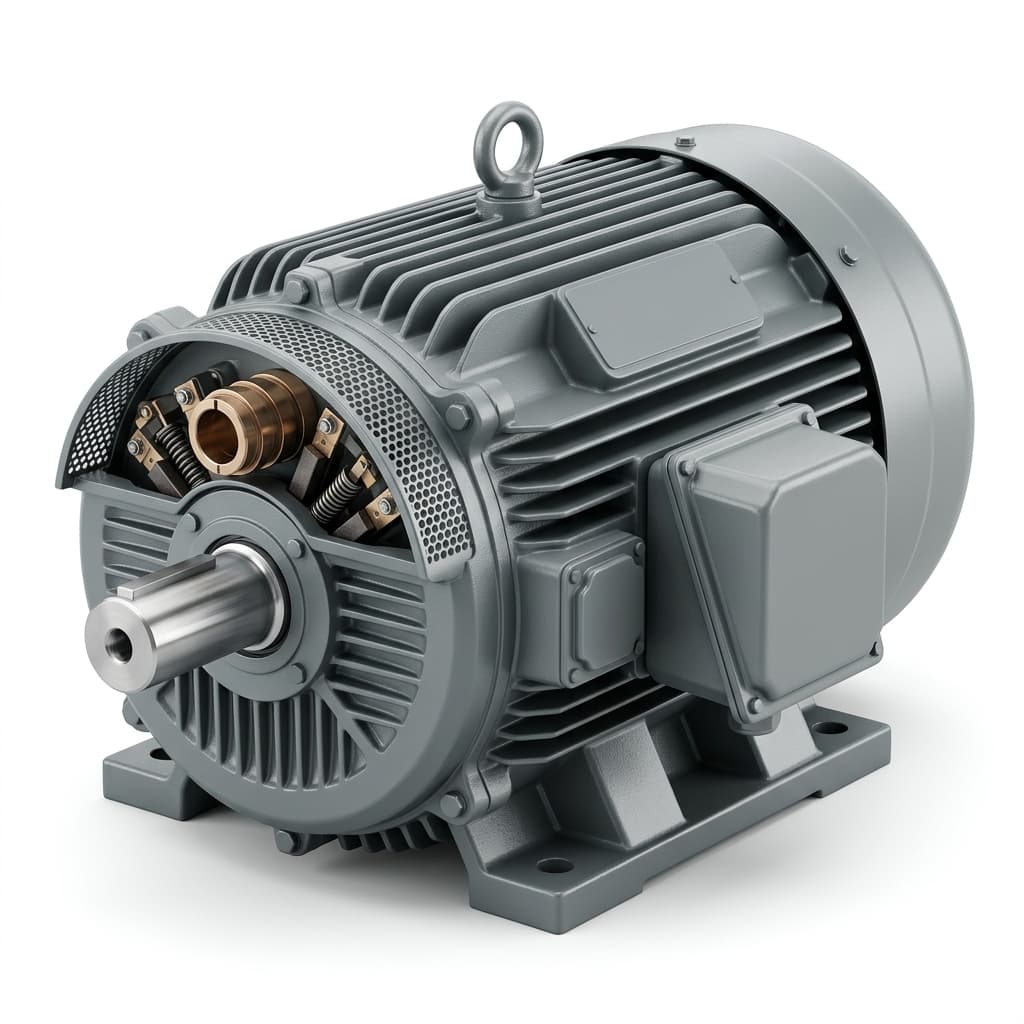
Why Magnet-Free Motors Are the Future of Industrial Automation
Discover how magnet-free motors like SynRM and WRSM are transforming industrial automation by eliminating rare-earth risks and boosting IE5 efficiency.
[!NOTE] Executive Summary (TL;DR):
- The Crisis: Rare-earth elements (Neodymium, Dysprosium) are subject to geopolitical monopolies, extreme price spikes (+/- 200%), and ESG carbon tariffs.
- The Solution: Magnet-free topologies like SynRM and WRSM utilize standard electrical steel and copper, completely insulating OEM procurement from commodity shocks.
- The Verdict: Magnet-free is no longer a compromise; it is the baseline for future-proof, IE5-compliant industrial automation.
Why Magnet-Free Motors Are the Future of Industrial Automation
Rare-earth supply chain concentration and price volatility have pushed OEMs to evaluate alternatives to Permanent Magnet Synchronous Motors (PMSM). The result: growing adoption of magnet-free motor architectures 2014 SynRM, WRSM/EESM, and SRM 2014 that use copper and electrical steel instead of NdFeB magnets.
In this deep dive, we explore why magnet-free motors—specifically Synchronous Reluctance Motors (SynRM) and Wound Rotor Synchronous Motors (WRSM)—are poised to become the new standard in industrial automation.
The Rare-Earth Dilemma
Traditional PMSMs rely heavily on neodymium and dysprosium to achieve their high power density. Unfortunately, these rare-earth metals present significant challenges:
- Price Volatility: The commodity pricing for neodymium is notoriously unstable, making long-term cost forecasting virtually impossible for high-volume procurement teams.
- Geopolitical Risks: The extraction and processing of rare-earth materials are highly concentrated geographically, creating a fragile supply chain susceptible to trade disputes and export restrictions.
- Environmental Impact: Mining rare-earth elements carries a significant environmental footprint. For brands committed to strict ESG (Environmental, Social, and Governance) targets, eliminating these materials from the bill of materials (BOM) is a strategic imperative.
The SynRM Solution: Uncompromised IE5 Efficiency
Synchronous Reluctance Motors (SynRM) offer an elegant, purely mechanical solution to the rare-earth problem. By utilizing an intricately profiled rotor made solely of electrical steel laminations, SynRM generates torque through magnetic reluctance rather than permanent magnets.
Key Advantages of SynRM:
- IE5 Ultra-Premium Efficiency: SynRM architectures consistently meet or exceed IE5 efficiency standards. Without the I²R (copper) losses in the rotor typical of induction motors, SynRM operates significantly cooler and more efficiently.
- Zero Magnet Degradation: Permanent magnets are susceptible to irreversible demagnetization at extreme temperatures. A SynRM rotor contains no magnets, allowing it to maintain nominal performance even in harsh, high-temperature industrial environments.
- Cost Stability: Because the primary raw materials are standard electrical steel and copper, the pricing model for SynRM is highly predictable and insulated from rare-earth market shocks.
WRSM: High Torque and Active Field Control
For applications requiring high starting torque and dynamic high-speed performance—such as heavy-duty extruders, large compressors, and commercial vehicle traction—the Wound Rotor Synchronous Motor (WRSM), also known as the Externally Excited Synchronous Motor (EESM), is the ideal magnet-free alternative.
Unlike SynRM, WRSM utilizes copper windings on the rotor. The magnetic field is actively controlled via an external excitation circuit (often using a brushless exciter or slip rings).
- Active Field Weakening: WRSM excels in the field-weakening region. While permanent magnet motors struggle with high back-EMF at high speeds, WRSM can simply reduce the excitation current, enabling highly efficient high-speed cruising.
- Customizable Performance Envelopes: The active rotor field allows for real-time optimization. The motor can be dynamically tuned by the inverter to maximize torque during launch and maximize efficiency during steady-state operation.
Accelerating the Transition
Transitioning a product line from IPM to magnet-free technology requires a specialized manufacturing partner. At Magnet-Free Motor, we focus RFQ reviews on hairpin winding feasibility, rotor lamination stamping, insulation planning, balance evidence, and end-of-line test requirements needed to scale next-generation architectures.
The shift away from rare-earth materials is no longer a futuristic concept—it is an immediate strategic necessity. By adopting SynRM and WRSM technologies, OEMs can future-proof their supply chains, reduce carbon footprints, and deliver uncompromised IE5 performance to the industrial automation sector.
Life Cycle Assessment (LCA) Comparison
To fully grasp the ESG impact of magnet-free motors, procurement teams should review the Life Cycle Assessment (LCA). Below is a typical breakdown comparing a 55kW PMSM vs. a 55kW SynRM over a 20-year operational lifespan:
| LCA Metric | PMSM (With NdFeB Magnets) | SynRM (Magnet-Free) | ESG Impact Reduction |
|---|---|---|---|
| Material Extraction Phase (CO2e) | Very High (Toxic tailings, heavy mining) | Low (Standard iron ore & copper) | ~85% Reduction |
| Manufacturing Phase Energy | High (Magnet sintering & magnetization) | Low (Standard stamping & winding) | ~40% Reduction |
| Operational Phase (Energy Efficiency) | IE5 (Ultra-Premium) | IE5 (Ultra-Premium) | Neutral (Both highly efficient) |
| End-of-Life / Recycling | Complex (Magnets require hazardous removal) | Simple (99% recyclable steel & copper) | ~90% Reduction in landfill waste |
By specifying SynRM, OEMs can significantly reduce their Scope 3 emissions without sacrificing operational efficiency.
Visualizing the Cost Stability of Magnet-Free Architecture
Below is a schematic representation of the raw material cost volatility index (2020-2026), comparing NdFeB (Rare Earth) to standard Electrical Steel & Copper used in SynRM and WRSM motors.
As illustrated above, transitioning to a magnet-free BOM insulates procurement from violent commodity shocks.
Related Reading
- IE5 SynRM vs. Induction Motors — The simplest magnet-free upgrade for industrial pump and fan applications.
- SRM Motors for Harsh Environments — When SynRM isn't tough enough: the SRM alternative.
- Rare Earth Price Forecast 2026 — Market data supporting the move away from NdFeB magnets.
Author

More Posts
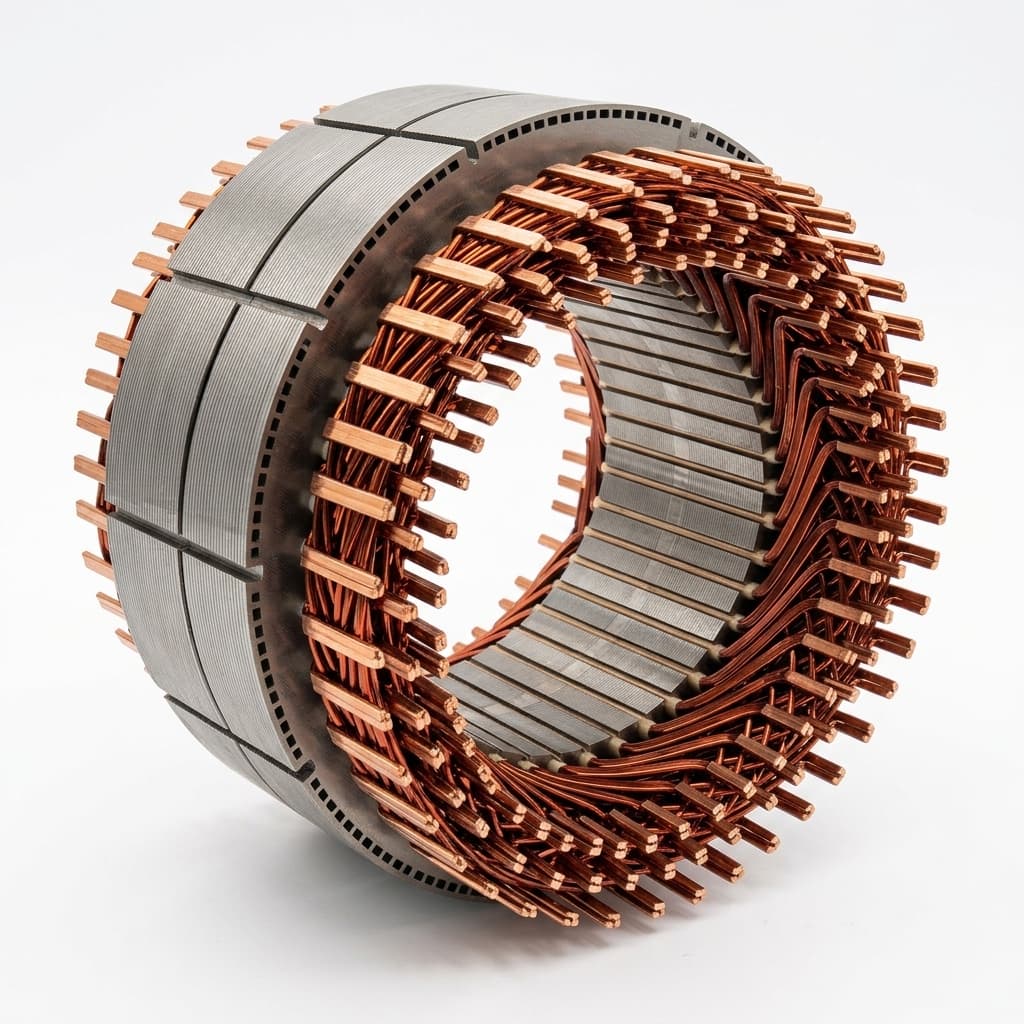
The Role of Hairpin Winding in High-Performance EV Traction Motors
Learn why automated hairpin winding technology is essential for maximizing power density and thermal efficiency in next-generation EV traction motors.
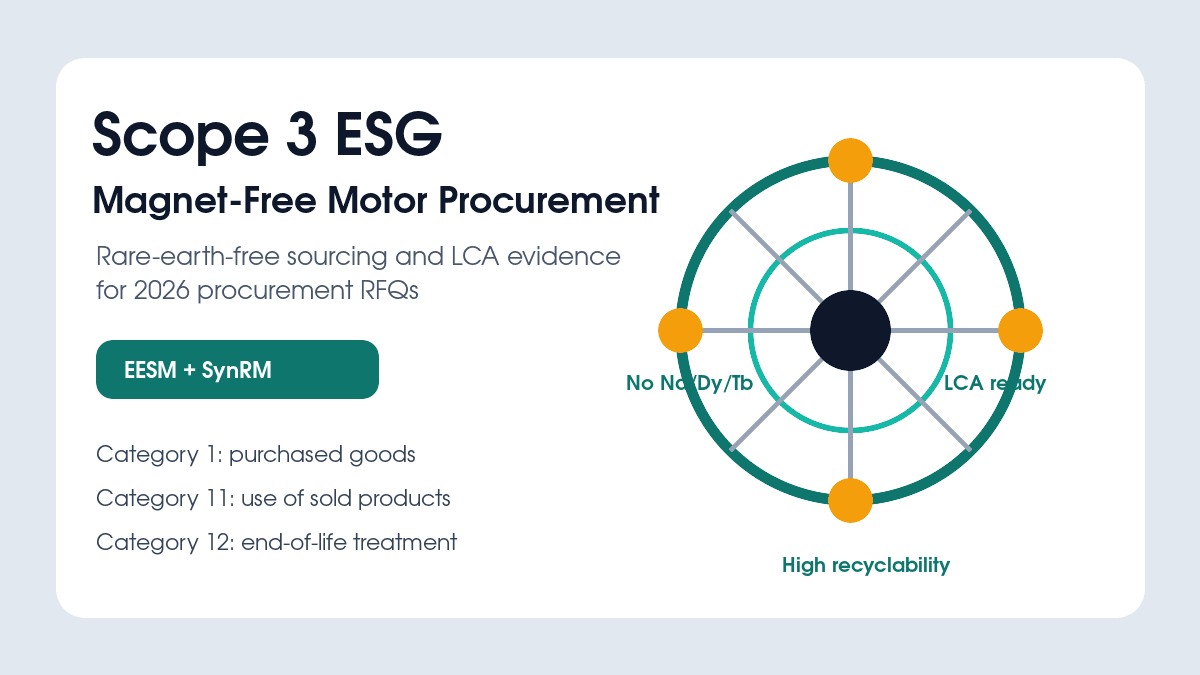
Scope 3 Emissions & ESG: The Magnet-Free Motor Procurement Strategy for 2026
Use magnet-free motor sourcing to lower Scope 3 emissions, reduce rare-earth ESG risk, and request LCA evidence in 2026 procurement RFQs.
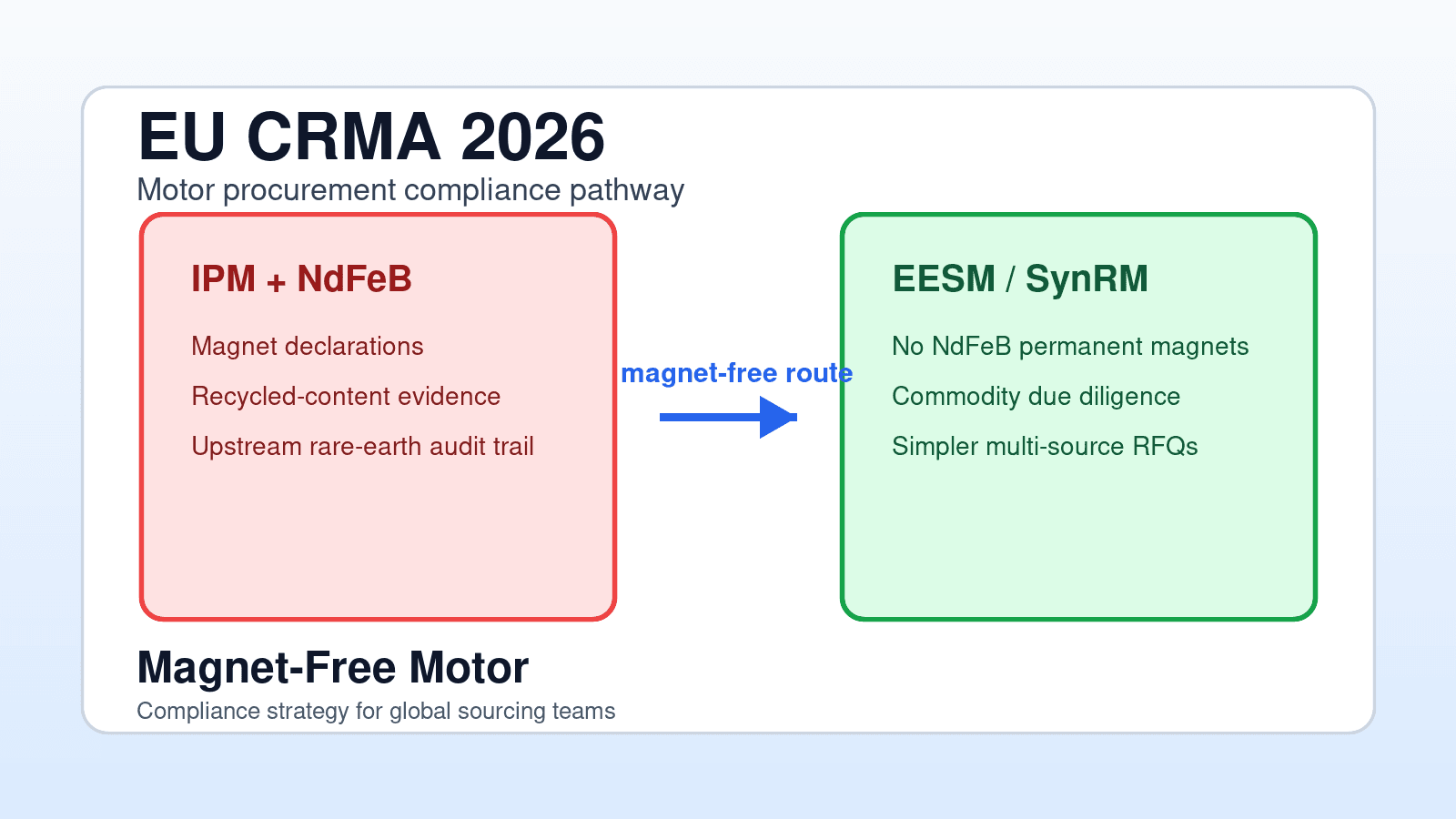
EU CRMA 2026: Why Magnet-Free Motors Are the Safest Compliance Strategy
How the EU Critical Raw Materials Act (CRMA) affects 2026 motor procurement. Compare NdFeB tracking overhead against magnet-free EESM and SynRM alternatives.